


Part of the conference was on the history infrastructure. One session was dedicated to the founder of museums. A second was on including the community. The third one was on the challenges facing museums at a divided moment in American history. The participants had no idea about the carnage that was about to happen.
Mobilizing Oral and Public History: Approaches to Participatory, Community Based, Interdisciplinary Projects
AHA Session 119
Saturday, January 4, 2025: 1:30 PM-3:00 PM
Chair: Christine E. Eubank, Bergen Community College
Panel:
Anthony Diaz, Newark Water Coalition
Christine E. Eubank, Bergen Community College
Wilmarie Medina-Cortés, Humanities Action Lab
Liz Ševčenko, Humanities Action Lab
Kristina Shull, University of North Carolina at Charlotte
Session Abstract
Ongoing and emerging crises on the global as well as local scale suggest that the twenty-first century is an inflection point in history. Oral, public, and digital historians, colleges and universities, issues organizations, cultural institutions, and community partners are forming coalitions and mobilizing around urgent social issues to develop interdisciplinary humanities-based projects that not only create useful narratives but encourage systemic changes for a more just, sustainable, and equitable future. This work is urgent, valuable, exhilarating, collaborative, and creative. Participants on this roundtable are college and university scholars, oral and public historians, museum and gallery curators, community activists, and organization leaders who will share their experiences and insights gained from developing, launching, and managing these types of projects.
This session will appeal to anyone doing work in digital, oral, and public history; scholars whose work centers community activism or issues of social and environmental justice; and those with an interest in developing similar coalitions and community-focused projects. Our goal is to generate a fruitful conversation with audience members. After the chair introduces the panel, each participant will give a five-minute statement that highlights a signature project or projects. The chair will pose questions to the panelists and the remaining session time will be devoted to discussion with the audience.
Founders of Major History Museums
AHA Session 170
Sunday, January 5, 2025: 8:30 AM-10:00 AM
Chair: Annie Polland, Tenement Museum
Panel:
Ruth Abram, Tenement Museum
Lonnie Bunch, Smithsonian Institution
Alice Greenwald, 9/11 Memorial & Museum
Gordon H. “Nick” Mueller, National WWII Museum
Session Abstract
Founders of major history museums in the US will discuss their motivations, challenges, and accomplishments in shaping institutions that preserve and narrate our collective past. Panelists will discuss insights into the intricacies of establishing and sustaining history museums, from initial conceptualization to navigating the complexities of funding, curation, and community engagement.
Abram
1. how can we be one nation today?
2. the creation of the museum for her was an emotional experience: she looked at the tenements where it happened, where the people really lived not so long ago
– 1300 people from 20 countries lived in the original museum building – the museum mission was to tell their story
– To meet this challenge we chose to invite the public in. We wanted them to tell the story as it was physically. A second group said don’ insult our intelligence in your exhibits. She could watch immigrants visiting seeing museum that was about their own story
– preservationists said the building was of no architectural value. Nobody famous had lived there. It was a slum. The museum had to build trust with the immigrant community that the building was worth preserving and the stories were worth telling.
Mueller: WWII Museum as America’s Parthenon as expression of ideals
1. opening the concentration camps tapes was a particularly poignant memory and exhibit
2. museums need to remember to stick to their mission
Greenwald
1. what it means as battleground site for the family visitors vs what it means as a political site are conflicting missions
– for 40% of families visiting the site it is a cemetery
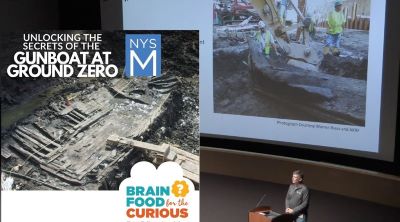
– NYSM and NYHS joined together with Port Authority as curators
2. email coverage and media coverage of the opening of the museum: #1 event then
open ended story
2 billion people watched worldwide
transition from memory to history 20 years later
3. teachers using museum as a textbook for students who don’t know where they were on 9/11 or who had not yet been born
4. it was a time when We the People came together with vigils and hugging
5. the story of the red bandana that touched the hearts of so many: it belonged to bond trader from Nyack, NY, who saved 18 people
6. the first column of structure removed now stands vertical again
– testament to cleanup and search for human remains
– volunteers/service/community
– many construction challenges
– Sandy delayed the opening 2 years
7. need to build trust with museum community
8. a wall separates human remains from the exhibit
Bunch
1. National Mall where people go to understand America
2. need to have a vision to start a museum
3. story for all of us and not just the 1950s when it was first conceived
4. international impact : telling the story of the outsider who becomes insider
5. refuses to touch collections from the Smithsonian – reached out to others
6. the great strength of the museum of America is as a story of a work in progress
7. the history museum is the #2 or #3 visited Smithsonian museum: history matters
8. 40,000 objects, 70% from basements of other museums
9. 2nd door added to slave cabin: we are free
10. tension between what they wanted and what they need
11. stamina to listen
Obviously this museum has borne the brunt of changes due to the President since the 2025 conference.
Session Chair Pollard: objects inspires reflect and discussion
1. because people were poor they were dirty image: gift of soap bar
Leading Public History Institutions in a Divided Moment: Lessons from the Field
AHA Session 212
Sunday, January 5, 2025: 10:30 AM-12:00 PM
Chair: Jonathan Mercantini, Kean University
Panel:
Sara R. Cureton, New Jersey Historical Commission
W. Todd Groce, Georgia Historical Society
M. J. Rymsza-Pawlowska, American University
Marc Lorenc, New Jersey Historical Commission
Session Abstract
This Roundtable featuring public history scholars and leaders of state historical organizations will discuss the challenges of doing public history in our current political climate and share some possible solutions. Using the upcoming 250th Anniversary of American Independence as a primary touchstone, but also considering other commemorations and public history events, the panelists will consider how recent histories and interpretations can be shared to increase the public’s knowledge about a more inclusive and complex past.
Bringing together Public History professionals from the Northeast, South, and West, the panel will examine how different states are engaging in the work of public history, with an eye toward how the upcoming anniversary of American Independence can serve as a useful anchor point to engage in these conversation. The panel also includes a look back at the United States Bicentennial in 1976, what useful lessons might be drawn from that experience, but also to consider the differences between that moment and now.
As a whole, we will seek to better understand how historians can build trust, engage the public, and be a part of this important anniversary.