
Subscribe to the IHARE Blog

Santa Orders Post Office to Separate Letters into Naughty and Nice for December 26 Delivery

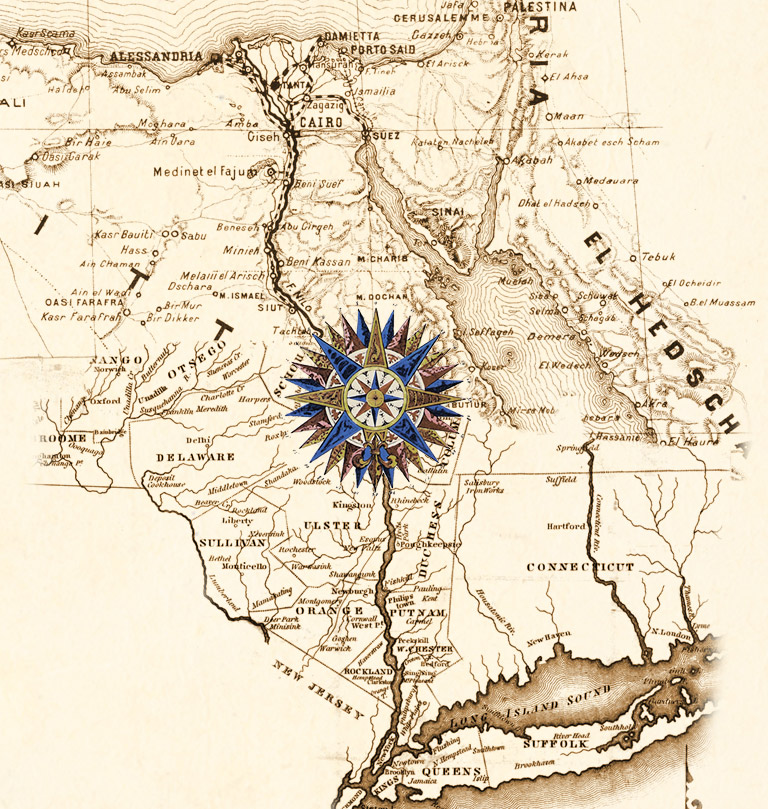
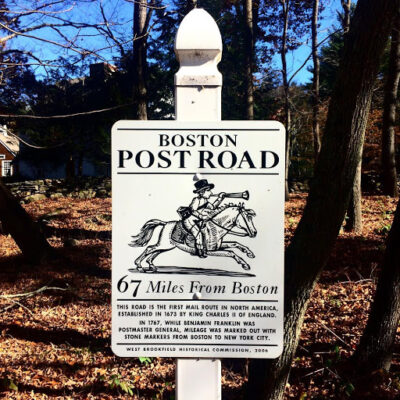
Before the Post Office had been eagerly weaponized into being part of a criminal conspiracy to undermine democracy in the United States, it had been a highly respected institution in American life. I live near the Boston Post Road. The colonial road was used by Founding Fathers headed towards Philadelphia. Lafayette used it when he returned the United States in 1824 which was recreated in 2024-2025 as part of his bicentennial.

Here are some positive images of the Post Office before its leaders became wanted posters displayed in their very buildings,

The Merry Mailman
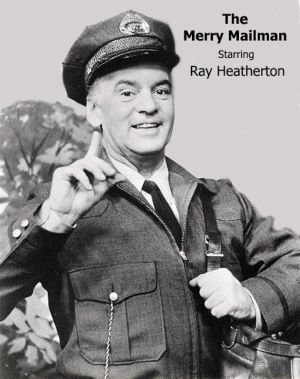
Ray Heatherton first appeared as The Merry Mailman on October 16, 1950, independent station WOR Channel 9. He had first used the character on his 1938 children’s records. The show was broadcast daily and Saturday before a studio audience. The show included games, songs, stories, craftmaking, hobbies, comedy, puppet skits, magic tricks, interviews with guest performers and personalities, and informational segments. Cartoons were interspersed with the live segments including Crusader Rabbit, the first made-for-TV animated series. It ran until 1956. So if you were a boomer in the New York metropolitan area, Ray Heatherton, the Merry Mailman, was part of your life. And if you lived in one of the new suburbs in Westchester and Long Island, you had your own mailman making regular deliveries.

Cliff Clavin
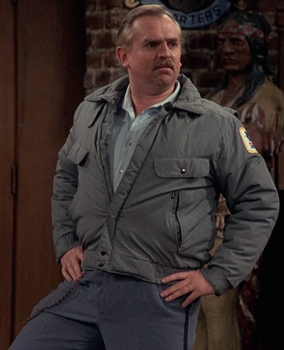
Everybody knew his name. John Ratzenberger was part of an all-star ensemble in the long-running show Cheers on must-see TV on Thursday nights on NBC from 1982 to 1993. The show like its contemporaries “Friends” and “Seinfeld” made diners and bars famous.

If you had a question, Cliff Clavin had an answer. Even if you didn’t have a question, Cliff Clavin had an answer, And it could be a long one as he regaled the regular characters with an unending stream of trivia and anecdotes.

He appeared in an episode entitled “Please Mr. Postman.” The title comes from the Motown group, the Marvelettes. The song was a hit and was subsequently covered by the Beatles and the Carpenters. The song dates from a time when receiving a letter was a big deal. Imagine a time when people could read and write!

Miracle on 34th Street (1947)
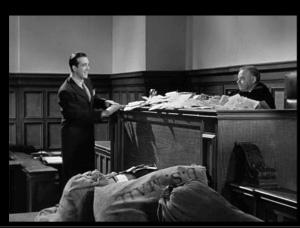
The scene in this classic Christmas story is in the courtroom involving three main characters:

Fred Gailey, the lawyer defending the sanity of a man claiming to be Kris Kringle
Henry X Harper, the judge presiding over the case
Thomas Mara, the New York District Attorney.
Macy’s is still here with its parade but Gimbels is not. The time when cities had signature department stores is long gone. Here is the dialog and stage directions from the climatic scene.

Mr. Gailey:
I’d like to submit the following facts in evidence. It concerns the Post Office Department…
an official agency of the United States government.
“The Post Office Department was created…”by the Second Continental Congress…”on July 26, 1776. The first postmaster general was Benjamin Franklin. The Post Office Department is one of the largest business concerns in the world. Last year, under Robert Hannigan it did a gross business of $1,112,877,174.

Mr. Mara:
Your honor. We’re all gratified to know the Post Office is doing nicely but it hardly has any bearing on this case.

Mr. Gailey:
It has a great deal, Your Honor, if I may be allowed to proceed.

Judge Harper:
By all means, Mr. Gailey.

Mr. Gailey:
Your Honor, the figures I have just quoted indicate an efficiently run organization.
United States postal laws and regulations make it a criminal offense to wilfully misdirect mail or intentionally deliver it to the wrong party Consequently the Department uses every possible precaution.

Mr. Mara:
Your Honor. The State of New York is second to none in its admiration of the Post Office Department. It is efficient, authoritative, and prosperous. We are very happy to concede Mr Gailey’s claims.

Mr. Gailey:
For the record?

Mr. Mara:
For the record. Anything to get on with this case.

Mr. Gailey (producing letters addressed to Santa): Your Honor. Then I want to introduce these three pieces of evidence.

Mr. Mara:
I’ll take them, please.

Mr. Gailey:
I have here three letters addressed simply “Santa Claus.” No other address whatsoever. Yet these were just now delivered to Mr. Kringle by bona fide employees of the Post Office. I offer them as positive proof that…

Mr. Mara:
Uh, three letters are hardly positive proof. I understand the Post Office receives thousands of these letters every year.

Mr. Gailey:
I have further exhibits, but I hesitate to produce them.

Mr. Mara:
Oh, I’m sure we’ll be very happy to see them.

Judge Harper:
Yes, yes. Produce them, Mr. Gailey. Put them here on my desk.

Mr. Gailey:
But, Your Honor…

Judge Harper:
Put them here on the desk. Put them here.

Mr. Gailey:
Yes, sir.

Gailey beckons to the court bailiffs, and they turn and open the courtroom doors. A procession of officers carrying bags and bags of mail enter the courtroom, walk down to the Judge, and unload the bags, containing thousands of letters to Santa, onto the Judge’s bench. The courtroom erupts with laughter, the press flash their cameras, and Judge Harper pounds his gavel to restore order.

Mr. Gailey:
Your Honor! Your Honor!
Your Honor… every one of these letters is addressed to Santa Claus.
The Post Office has delivered them. Therefore, the Post Office, a branch of the federal government, recognizes this man, Kris Kringle, to be the one-and-only Santa Claus!

Judge Harper (clearing away the pile of letters heaped on his desk so he can be seen):
Since the United States government declares this man to be Santa Claus, this court will not dispute it.
Case dismissed.

The current Supreme Court similarly ruled “case closed” on the efforts to use the Post Office to steal the election. He doesn’t have enough confidence in the gerrymandering and voter suppression to accomplish the task. We should expect pictures of the easily weaponized Postmaster David Steiner, to appear in every post office building.

Is America Dreaming of a White Christmas?

Caption from the front page above the fold on the NYT 12/26/23 “Once Again, Christmas Snow Is a No-Show in New York. It has not snowed more than an in New York City in a long time — 680 days, to be exact. And it has not snowed on Christmas in 14 years.” The photograph is of Madison Avenue and 40th Street in Manhattan courtesy of Langill and Darling in the Massachusetts Historical Society archives

Is America dreaming of a White Christmas?

The questioned can be answered in multiple ways.

PHYSICAL SNOW

The first and most obvious way is about snow. The caption from the photograph on the above-the-fold front page of The New York Times on December 26, 2023, highlights the fact that the snow on the ground is less frequent if at all now in many parts of the country. I remember shoveling the front driveway and walk on multiple occasions when I was growing up in New York. Storms of 8” or more were routine. School closings were routine. Cars parked on the side of the hill around the corner from me were routine as they simply could not make it up the hill. I remember my father going to the gas station to have special snow tires put on the car he used to drive to work. All this was normal.

That situation no longer exists. Snow is rare and much less now when it does occurs. My childhood days are from a distant past somewhere after the dinosaurs and before the internet. It is not unusual now to read about people who moved north for whatever reason only to find out that San Diego weather came with them. Ski resorts obviously wish for a white Christmas but we live in a world where there is even indoor skiing.

DEMOGRAPHIC SNOW

The demography of snow in the United States has changed substantially. For years the country has experienced the growth of the sun-belt states. In the winter, their population surges when beings called “snowbirds” sojourn for the winter to warm states. Then they return north in the spring to resume their lives back “home.” Some people after years of making the trip back-and-forth drop the “back’ part and decide not to return.

These population movements have had a political impact as well. For example, for a brief time, New York State had 45 Congressional Districts. Then after the 1950 census and the subsequent censuses that number has dwindled to 26 today. Projections indicate a significant drop to 23 by the time of the 2030 census. The constant reduction in seats has led to continual wrangling in the state legislature over where the cuts should be. The pattern of one upstate (Republican) and one downstate (Democrat) can no longer be maintained. There simply are not enough Republicans left in the state.

The beneficiaries of these demographic movements have been the sun-belt states, especially Florida. New York once was a state which produced presidential candidates, even from the same county. When finally a candidate from New York once again did become President he fled the state to Florida but it has not enabled him to escape litigation against him from New York. Still his departure to a place where he can ride a golf cart year-round reflects the demographic change which has occurred.

CULTURAL WHITE CHRISTMAS

For decades if not longer, white Christmas on the ground, expressed itself in the culture of the United States. The song “White Christmas” written by Jewish immigrant Irving Berlin, became one of the great block busters in music history. It has sold tens of millions physical albums, been covered by a large range of singers, and continues on in multiple formats.

It appeared in the movie “Holiday Inn” in 1942 and then again in 1947 in the movie “White Christmas.” The movies were very New England in their setting and in the role of snow. In effect for the Depression and World War II generations the movies and music defined what Christmas should be just as Norman Rockwell illustrated what Thanksgiving should be. The movie “White Christmas” even starts and ends with World War II figures: at the beginning, on a Hollywood set of a war camp and at the end with the now veterans rendezvousing at the inn run by their former commanding officer. This movie and music were passed on to the baby boomer generation raised in one-TV homes.

Another cultural white Christmas staple is “It’s a Wonderful Life.” This time the movie is from 1946. Instead of Jewish Irving Berlin, Sicilian Italian Frank Capra was the man behind the scenes. In this movie, English George Bailey builds homes for Italian immigrants, a subset of the main story line which doesn’t get a lot of attention. Snow does factor into the story line. Here we have a story without music (save for the high school graduation scene) about living the American Dream including by people who would be classified as “vermin.”

It should be noted that Jews and Italians, often living check to jowl in places like Brooklyn were not considered to be “white” or real Americans either. They simply created the images, scenes, storylines, and music that came to be identified as authentic America.

One last oldie but goodie from cultural white America is “Miracle on 34th Street” also from 1947. This movie is light on snow and on immigrants becoming Americans living the American dream. In this case, that dream is symbolized by a newly-built house in the suburbs. The storyline revolved around Gimbels, founded by a Jewish immigrant, and Macy’s, purchased by Jewish immigrants. These stores with their Thanksgiving parades and July 4th fireworks also became defining symbols of the American Dream even though their vaunted rivalry from around the time of the movie has long since passed.

Together these movies and music made white Christmas in the United States in the 20th century. So the question to be asked now is not “Is there a Santa Claus” answered in an editorial published in the New York newspaper The Sun on September 21, 1897, but “Does American Dream of a white Christmas anymore? The fake conflict between wishing people a merry Christmas or not obscures at larger question of what the holiday stands for besides Black Friday and a zillion Hallmark movies.

The original white Christmas developed at a specific point in time at the end of World War II. It followed on the New England tradition of “We are a city on a hill and the eyes of the world are upon us.” America today does not need to wear blinders to the world that was back then but nor should the potential of what America could become be dismissed either.

WHITE CHRISTMAS TODAY

Timed have changed.

Today, many new Americans are not white.
Today, many new Americans did not grow up with snow at sea-level.
Today, many new Americans did not grow up with Santa Claus.
Today, many new Americans did not grow up with the white Christmas movies.
Today, many new Americans do not remember 9/11 yet alone any of the historical benchmarks in American history of previous generations or if they do remember it is not from being in the United States then.
Today, the younger generation does not even remember 9/11 yet alone any of the historical benchmarks in American history of previous generations either.
Today, the younger generation often thinks of America as a stolen land and not a land of promise.

The core values expressed in the vision of white Christmas America forged in the aftermath of World War II were:

America as a melting pot
America as the land of the American Dream
America as the leader of the free world.

They were a vision and not a reality for all American citizens yet it was something We the People shared in common even when we fell short.

The question of is America dreaming of a white Christmas can be answered in many ways. Even the physical meaning of actual snow on the ground has been caught up in the polemics of climate change just being another hoax. True, the storylines and music may change to reflect changes which have occurred in American society since then, but they still should reflect the core values expressed decades ago.

Merry Christmas Everyone.